Protecting People Without Killing the Vibe
Good festival security is not about killing the vibe.
It is about creating an environment where artists can perform, vendors can work, crew can focus on operations, and guests can enjoy the experience safely.
When security is done well, most people barely notice it. The event feels calm, organised, and welcoming. People move easily around the site, communication flows between teams, and potential problems are handled quietly before they grow into something bigger.
At its best, festival security becomes part of the event infrastructure — supporting the experience rather than dominating it.
Security Is Part of the Event Plan
In New Zealand, event organisers have a responsibility to create a safe environment for both workers and attendees. That responsibility does not start once the gates open. It begins during the planning phase of the event itself.
Good security planning looks at the whole picture before anyone arrives on site.
This includes thinking about:
• entry and exit points
• guest flow around the venue
• communication between teams
• emergency planning
• lighting and visibility
• access for staff and vehicles
Security should never be treated as a last-minute add-on. When it is included early in the planning process, it becomes easier to design a layout that works smoothly for everyone.
The First Security Moment Happens at the Gate
For most guests, the first interaction with event security happens at the entrance.
That moment sets the tone for the entire event.
A calm and organised entry point tells people they are in a safe environment. Staff who are visible, approachable, and clear about what is happening can turn a busy arrival into a smooth experience.
If entry points are confusing, poorly staffed, or under-planned, problems begin immediately.
Queues grow longer. Guests become frustrated. Staff feel pressure. Small issues start appearing before the event has even begun.
That is why gate planning and guest flow are some of the most important parts of festival security.
Good Security Helps People Move
One of the most valuable roles security teams play is helping people move smoothly through the site.
This includes:
• guiding guests through entry points
• helping direct crowd movement
• supporting traffic and parking teams
• monitoring pressure points around stages or walkways
When movement is smooth, the entire event feels calmer.
When movement becomes blocked or confusing, crowd pressure builds quickly.
Security teams who understand the layout of the event and the expected crowd patterns can help prevent these problems early.
Communication Is Everything
Security does not operate in isolation at an event.
The best festival operations happen when security teams communicate constantly with:
• event organisers
• medical teams
• traffic management crews
• gate staff
• production teams
Good communication allows problems to be solved quickly and quietly.
A small issue reported early can be handled calmly. Without communication, that same issue may escalate into something far more visible and disruptive.
Radios, briefings, and clear reporting channels are essential for keeping everyone connected.
De-Escalation Is a Core Skill
Not every security situation requires a strong response. In fact, most situations are best resolved through calm communication.
Experienced festival security teams understand how to de-escalate problems early.
This might involve:
• separating people before an argument grows
• calmly explaining event rules
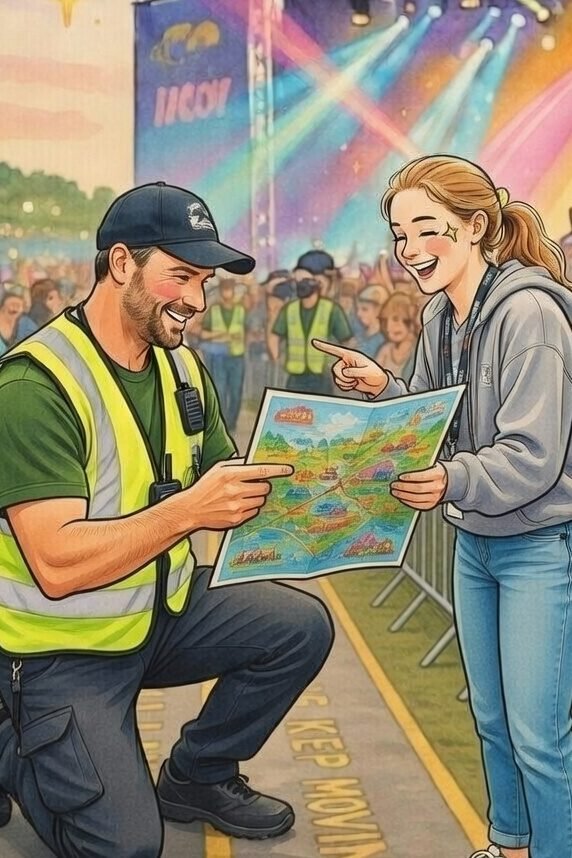
• helping someone who may be overwhelmed or lost
• redirecting guests away from restricted areas
When handled correctly, these interactions never become public scenes. Guests move on, and the event atmosphere remains positive.
Aligning With New Zealand Event Safety Guidance
Security planning at events also aligns with broader guidance in New Zealand around:
• event risk management
• workplace safety obligations
• crowded places planning
These frameworks emphasise proportionate controls — meaning security should match the size, nature, and risks of the event.
The goal is not to create an intimidating environment. The goal is to have people who are alert, equipped, and trained, ready to respond if something unexpected occurs.
Good planning, clear communication, and experienced staff help make that possible.
Security Should Support the Experience
When festival security works well, guests feel safe without feeling restricted.
They can focus on the music, the art, the food, and the community around them.
Artists can perform.
Vendors can operate.
Organisers can focus on the event itself.
Security becomes part of the quiet infrastructure that supports everything else.
Planning Security That Fits Your Event
Every event is different.
A small community gathering, a boutique festival, and a large multi-stage event all require different approaches to security planning.
If you want security that protects people without flattening the atmosphere, Palisade can help shape a plan that fits the scale and style of your event.
Good security is not about presence alone.
It is about preparation, communication, and understanding how people move through shared spaces.
When those pieces come together, the entire event runs more smoothly.