
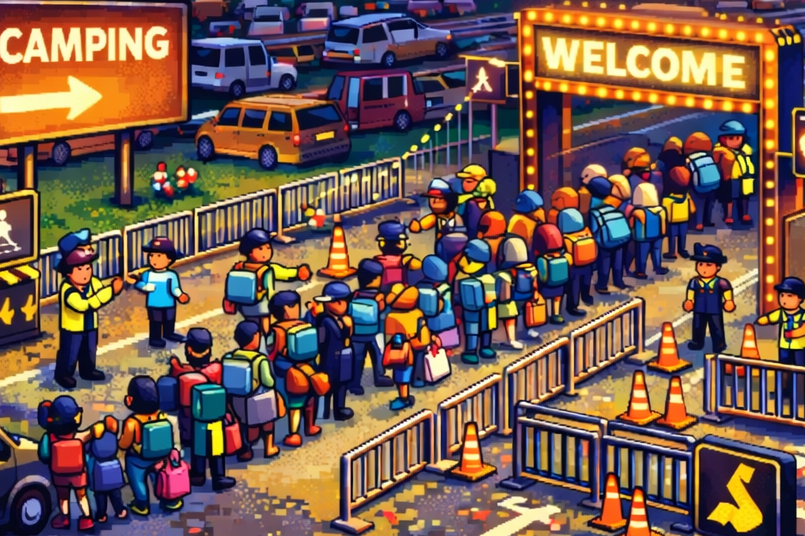
Moving People Without Creating Chaos
Why Entry Gates, Parking Flow, and Clear Signage Matter More Than the Main Stage
Most event problems start long before the main stage ever matters.
They start at the gate.
They start in the carpark.
They start at the first sign a guest tries to read while driving in.
If people do not immediately know where to go, where to park, or where to line up, confusion begins. And once confusion starts at the entry point, the ripple effects move through the entire event.
Crowd management research and event safety guidance consistently point back to the same foundation: movement planning. When entry routes, parking areas, and pedestrian flows are clearly designed before an event opens, everything runs more smoothly.
When they are not, even a well-organised festival can begin the day with unnecessary stress.
The First Impression of Any Event
Guests rarely remember the exact moment they arrived at a festival or event. But they absolutely remember how it felt.
Did they sit in traffic for an hour?
Did they drive around in circles trying to find the right entrance?
Did they feel welcomed and guided when they arrived?
Or did it feel chaotic before they even parked the car?
The arrival experience sets the tone for everything that follows. A smooth entry makes guests feel relaxed and excited. A messy arrival can create frustration before the event has even begun.
This is why gate operations and traffic flow planning matter so much.
Good Guest Flow Is Simple — But It Must Be Planned
Good guest movement is not complicated. In most cases it comes down to three practical elements working together:
Clear signage
People should be able to understand where to go without asking anyone.
Visible staff
Friendly staff at the right points help confirm guests are moving in the correct direction.
Logical layout
Parking areas, pedestrian routes, and entry gates should feel intuitive.
When these three elements work together, people move naturally through the site without congestion.
Where Crowd Problems Usually Start
When guest flow has not been planned carefully, the same issues tend to appear at events.
Conflicting traffic directions
Vehicles entering, exiting, and searching for parking can create bottlenecks when routes overlap.
Poor signage
Small signs or unclear directions force drivers to slow down and guess where they should go.
Too few staff at key points
Without someone guiding arrivals, even a simple parking layout can become confusing.
Lighting problems at night
Late arrivals may struggle to see signs or understand where to walk.
Multiple access routes
Events with several entrances require clear coordination to prevent people arriving at the wrong gate.
Individually these problems may seem minor. Together they can quickly create congestion and frustration.
Parking Is Part of Crowd Management
Event planners often focus heavily on stages, artists, and production.
But in reality, the parking area is often the largest part of the guest experience.
A good parking plan should include:
• clear traffic lanes
• overflow parking areas
• safe pedestrian routes
• lighting for night arrivals
• clear signs directing vehicles
When parking is organised well, guests arrive calmly and confidently.
When parking is chaotic, frustration starts before people even reach the gate.
The Role of a Calm Welcome Team
Staff at entry points are more than just security or ticket checkers. They are the first human interaction guests have with the event.
A calm, visible welcome team can dramatically improve the arrival experience.
Their role often includes:
• guiding guests to the correct entrance
• helping direct parking flow
• answering simple questions
• keeping lines organised
• maintaining a relaxed atmosphere
Guests take cues from staff behaviour. If the team at the gate is calm and organised, guests tend to follow that energy.
Festivals Add Extra Complexity
Large festivals introduce additional challenges for guest flow planning.
These can include:
• camping areas
• alcohol consumption
• late-night arrivals
• rideshare drop-off zones
• multiple pedestrian routes
Each of these factors can affect how people move around the site.
Without a clear movement plan, even small issues at the gate can quickly escalate.
Simple Planning Prevents Big Problems
Most crowd issues at events are not caused by dangerous behaviour or intentional disruption.
They are caused by uncertainty.
When people know exactly where to go, they move calmly and predictably. When they do not, hesitation and confusion create pressure points.
That is why movement planning should be part of early event design, not an afterthought once the gates open.
Practical Event Support
At Palisade Security we regularly see how small improvements to entry planning can make a huge difference to event operations.
From gate layout to parking guidance and visible staffing, simple practical systems help events run smoothly and safely.
Good guest flow is not about controlling people.
It is about guiding them clearly and calmly from the moment they arrive.
When that works well, everything else becomes easier.